

 By
Can a Clogged Dryer Vent Cause Carbon Monoxide?
Quick answer: Yes, but only if you have a gas dryer. A gas dryer burns natural gas or propane to make heat, and that burning creates carbon monoxide (CO). The vent is what carries those exhaust gases outside. If the vent is clogged with lint, crushed, disconnected or blocked by snow or a nest, the exhaust can back up into your home. Electric dryers don’t burn fuel, so they don’t produce CO, although a clogged vent on any dryer is still a fire risk.
Why a gas dryer vent matters more than you think
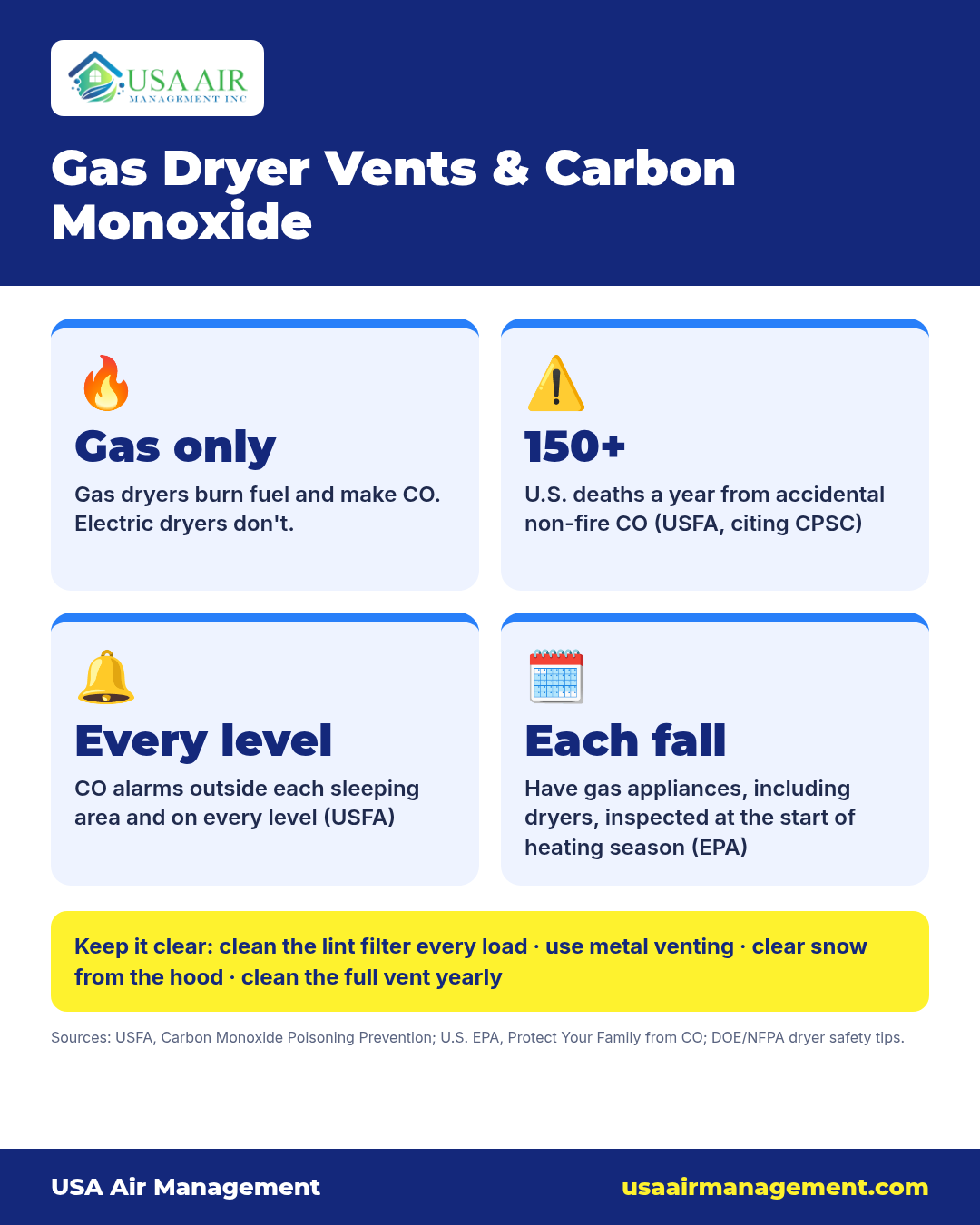
Carbon monoxide is colorless and odorless. The U.S. Fire Administration notes that CO poisoning can happen when a fuel-burning appliance “is not working or vented properly,” and that more than 150 people in the United States die every year from accidental non-fire CO poisoning, citing Consumer Product Safety Commission data (USFA, Carbon Monoxide Poisoning Prevention).
The EPA lists gas dryers alongside furnaces, water heaters and fireplaces as appliances that should be inspected by a trained professional at the start of every heating season, and says to make sure flues are connected, in good condition and not blocked (EPA, Protect Your Family from Carbon Monoxide Poisoning).
Video transcript
- Got a gas dryer? A gas dryer burns fuel, and the vent carries that exhaust, including carbon monoxide, outside.
- Non-fire carbon monoxide kills more than 150 people in the U.S. each year, according to the U.S. Fire Administration, citing Consumer Product Safety Commission data. It's colorless and odorless.
- How do vents get blocked? Lint buildup, a crushed hose behind the dryer, a disconnected joint, or snow or a nest at the vent hood.
- Put carbon monoxide alarms outside each sleeping area and on every level of the home, as the U.S. Fire Administration recommends.
- To keep it clear, clean the lint filter every load, use metal venting, and have the full vent cleaned every year.
- USA Air Management cleans dryer vents, air ducts and chimneys. Find current offers at usaairmanagement.com/coupons.
How a dryer vent gets blocked
- Lint buildup. The lint screen doesn’t catch everything. Lint settles in the duct, especially at elbows and long horizontal runs.
- A crushed or kinked transition hose behind the dryer, often from pushing the machine back against the wall.
- A disconnected joint inside a wall, ceiling or basement, which can dump exhaust into the house instead of outside.
- A blocked exterior hood: snow, plants, a stuck flap or a nest. USFA specifically says to keep dryer vents clear of snow and other debris.
Warning signs to take seriously
Some signs point to a restricted vent: clothes taking longer than normal to dry, a hot laundry room, or a flap outside that barely moves when the dryer runs. See our guide to the signs of a clogged dryer vent.
CO itself has no smell, so you can’t rely on your senses. The EPA says moderate CO exposure can cause severe headaches, dizziness, confusion, nausea or fainting, and that low levels can cause shortness of breath, mild nausea and mild headaches. Because those symptoms feel like the flu, watch for patterns: symptoms that ease when you leave the house, or several people feeling sick at the same time.
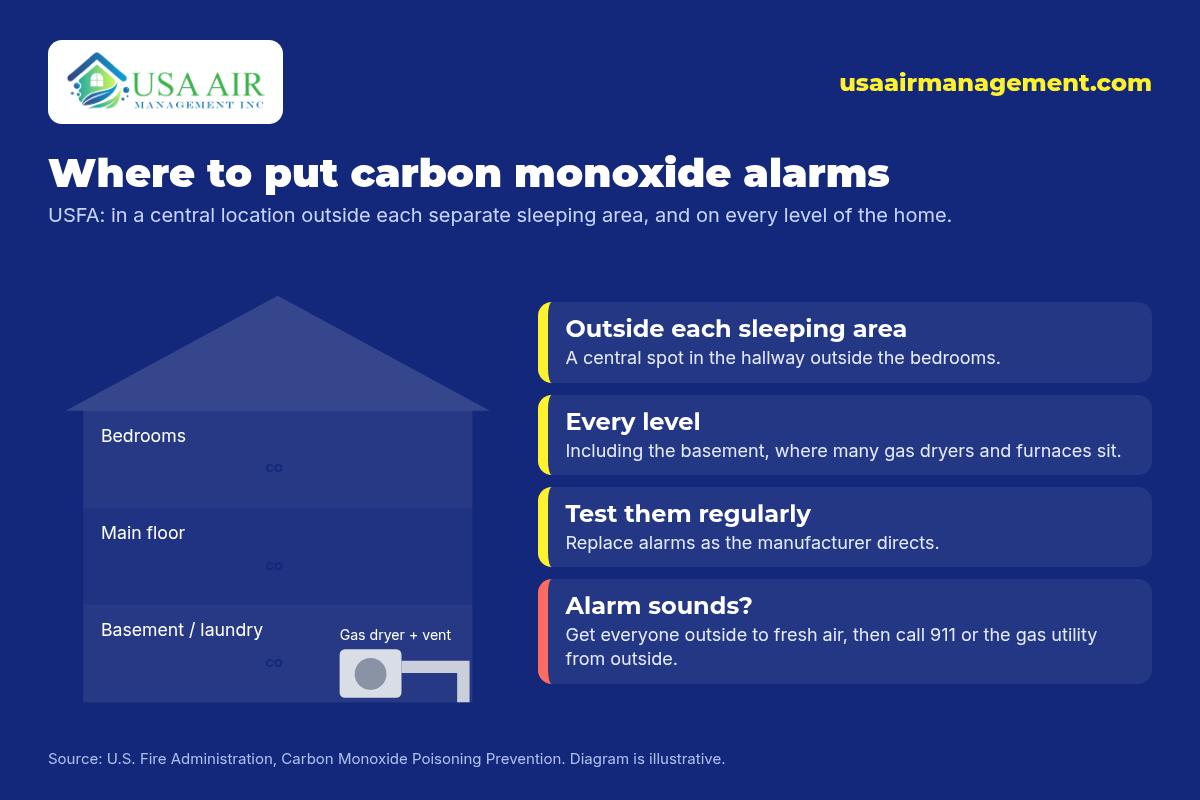
If a CO alarm sounds or you suspect CO: get everyone outside to fresh air, then call 911 or your gas utility from outside. Don’t go back in until responders say it’s safe.
Put CO alarms where they count
USFA recommends installing CO alarms in a central location outside each separate sleeping area and on every level of the home. If your laundry room is in the basement or next to a bedroom, that level and that sleeping area need coverage. Test alarms regularly and replace them as the manufacturer directs.
Keep the vent clear: a simple routine
- Clean the lint filter before or after every load.
- Use rigid or flexible metal venting, which the Department of Energy’s dryer safety sheet says helps sustain proper airflow and drying time (DOE / NFPA dryer safety tips).
- Check that the outside flap opens when the dryer runs, and clear snow after storms.
- Have the full vent cleaned once a year, or sooner if drying takes longer than normal. Our post on how often a dryer vent should be cleaned covers the schedule.
- Have a gas dryer’s gas line and connection checked by a qualified professional, as the same DOE sheet advises.
What we check on a dryer vent visit
Our technicians clean the full run, from the dryer connection to the exterior hood, with a rotary brush and a high-pressure blower. Our dryer vent safety inspection looks at airflow, duct type, length, the number of turns, and the exterior vent. We clean vents. Gas line repairs and appliance service belong to a licensed gas or appliance technician, and we’ll tell you if we see something they should look at. Details are on our dryer vent cleaning page, and current offers are on our coupons page.
Frequently asked questions
Can a clogged dryer vent cause carbon monoxide poisoning?
With a gas dryer, yes. A blocked or disconnected vent can send exhaust that contains carbon monoxide back into the home. Electric dryers don’t produce carbon monoxide.
Do electric dryers produce carbon monoxide?
No. Electric dryers don’t burn fuel. A clogged vent on an electric dryer is still a fire hazard, so it still needs regular cleaning.
Where should I put a carbon monoxide alarm?
USFA recommends a CO alarm in a central location outside each separate sleeping area and on every level of the home.
How often should a gas dryer vent be cleaned?
At least once a year, and sooner if clothes take longer than normal to dry. The EPA also advises a professional inspection of gas appliances, including gas dryers, at the start of each heating season.
What should I do if my CO alarm goes off?
Get everyone outside to fresh air right away, then call 911 or your gas utility from outside. Don’t go back in until responders say it’s safe.
Schedule a dryer vent cleaning: Toll free: (877) 811-5131 · Current coupons
Sources
- USFA, Carbon Monoxide Poisoning Prevention: https://www.usfa.fema.gov/prevention/life-safety-hazards/carbon-monoxide/
- U.S. EPA, Protect Your Family and Yourself from Carbon Monoxide Poisoning: https://www.epa.gov/indoor-air-quality-iaq/protect-your-family-and-yourself-carbon-monoxide-poisoning
- U.S. DOE (NFPA), Clothes Dryer & Washing Machine Safety: https://www.energy.gov/documents/nfpadryerwashersafetytipspdf