
 By
Signs Your Air Ducts Need Cleaning
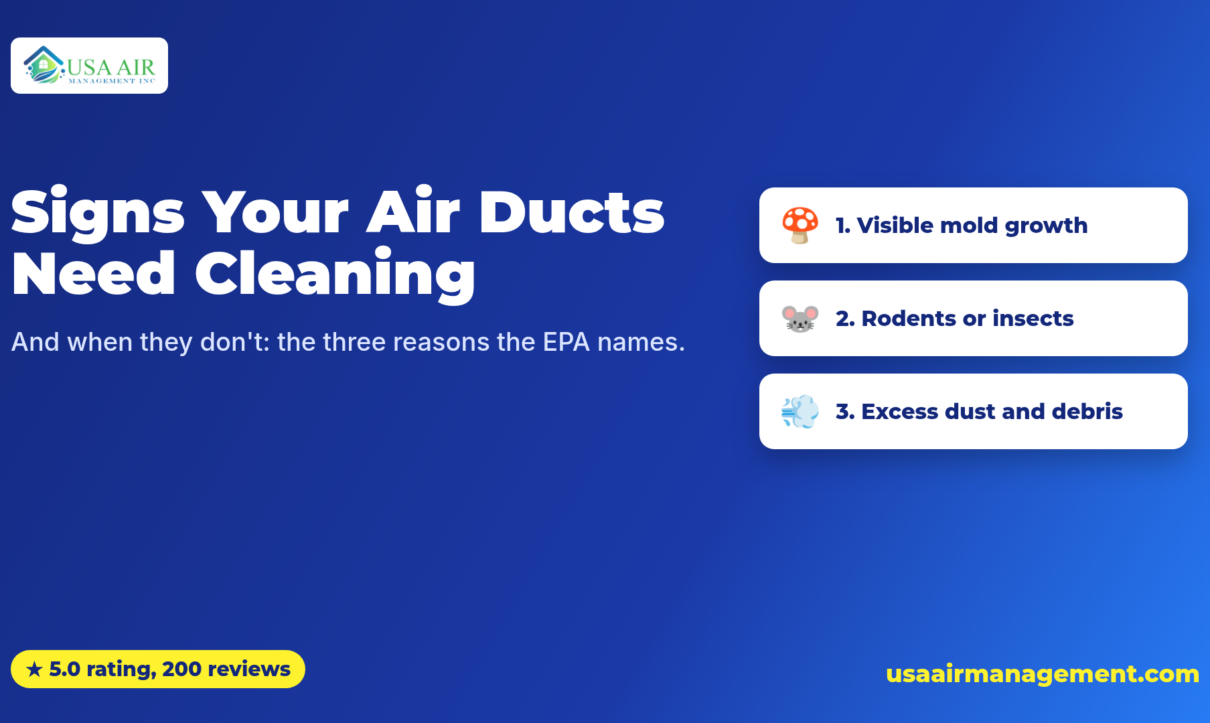
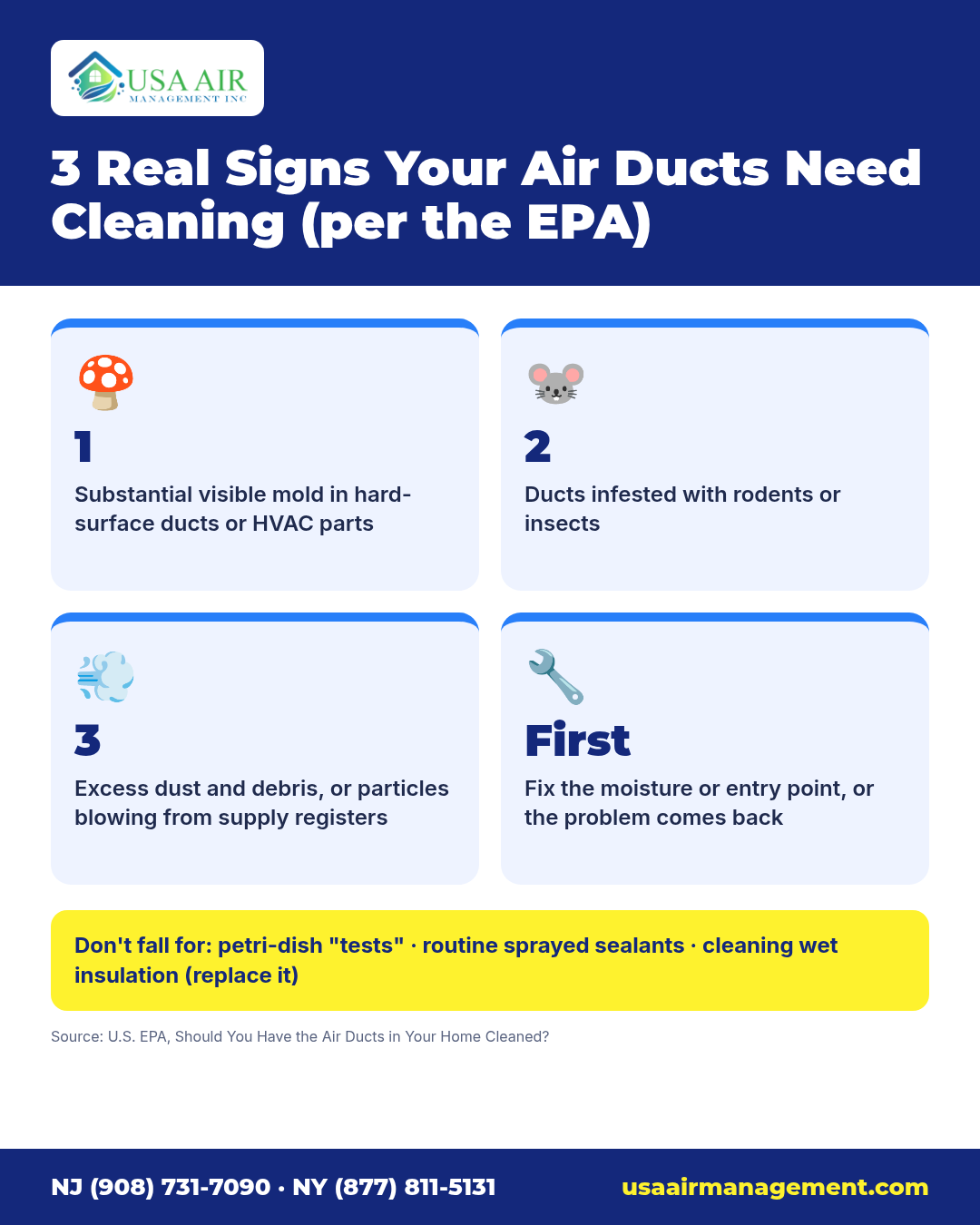
Quick answer: The EPA says to consider duct cleaning when there is substantial visible mold growth inside hard-surface ducts or on other parts of the system, when ducts are infested with rodents or insects, or when ducts are clogged with excessive dust and debris, or particles blow out of the supply registers. A light layer of dust alone isn’t a health risk.
Start with the honest answer
Many duct-cleaning ads lead with fear. We’d rather start with the U.S. Environmental Protection Agency’s guidance, Should You Have the Air Ducts in Your Home Cleaned?. The EPA says duct cleaning “has never been shown to actually prevent health problems,” and that “there is no evidence that a light amount of household dust or other particulate matter in air ducts poses any risk to your health.” It does not recommend routine cleaning on a schedule, only cleaning as needed.
That doesn’t mean duct cleaning is never worth it. It means you should clean for a real reason. Here are the reasons the EPA names, and how to check for each one.
Video transcript
- Do your ducts need cleaning ?. Here's what the EPA actually says.
- Light dust = normal. A light layer of dust isn't a health risk. The EPA says to clean as needed, not on a schedule.
- The EPA's 3 reasons. 1 Visible mold growth; 2 Rodents or insects; 3 Excess dust and debris, especially dust puffing out of the vents
- The 5-minute check. Pull a register, shine a flashlight inside, and run the blower for a moment. Watch for thick dust or droppings.
- Found a problem? We clean the whole system. Unlimited vents and returns, trunk lines, branches and the furnace chamber. Free dryer and chimney inspection.
- USA Air Management. (877) 811-5131. usaairmanagement.com.
Sign 1: Visible mold growth inside the ducts or HVAC system
The EPA lists substantial visible mold growth inside hard-surface (for example, sheet metal) ducts or on other heating and cooling components as a reason to clean. It adds three cautions every homeowner should know:
- Many parts of the system can’t be inspected visually, so ask the provider to show you any mold they say they found.
- Something that looks like mold can only be confirmed by an expert, and sometimes needs lab analysis.
- Wet or moldy duct insulation can’t be effectively cleaned and should be removed and replaced.
Most important, if the moisture problem that caused the mold isn’t fixed, the EPA says the mold will come back. A musty smell when the AC starts is a common clue that the coil or drain pan needs attention. That’s why we also offer air handler coil cleaning.
Sign 2: Rodents or insects in the ductwork
Ducts infested with vermin, rodents or insects, are the EPA’s second reason. Signs include droppings near registers, scratching sounds in walls or ceilings, nesting material, or an odor that gets stronger when the system runs. Have the entry point sealed first, or the problem will come back.
Sign 3: Excessive dust and debris, or dust blowing from the vents
The EPA’s third reason is ducts that are clogged with excessive dust and debris, or particles that are actually released into the home from the supply registers. Homeowners notice this as:
- Puffs of dust when the blower starts.
- Heavy dust on the register covers right after cleaning.
- Debris you can see when you remove a register and shine a flashlight inside.
Construction is a common cause. Drywall sanding and renovation dust easily get into an open return. If you’ve remodeled, or bought a home right after a renovation, it’s worth looking.
What is not, by itself, a reason to clean
- A thin layer of dust on the register grille. That’s normal.
- A petri-dish “test.” The EPA calls settling plates an inappropriate way to show contamination, because some microorganisms are always present in air.
- A sales pitch for sprayed sealants or biocides. EPA, NADCA and other industry groups don’t recommend routine use of sealants. The EPA says biocides should only be used if needed to control mold, after proper cleaning, and according to label directions.
How to check your own ducts in five minutes
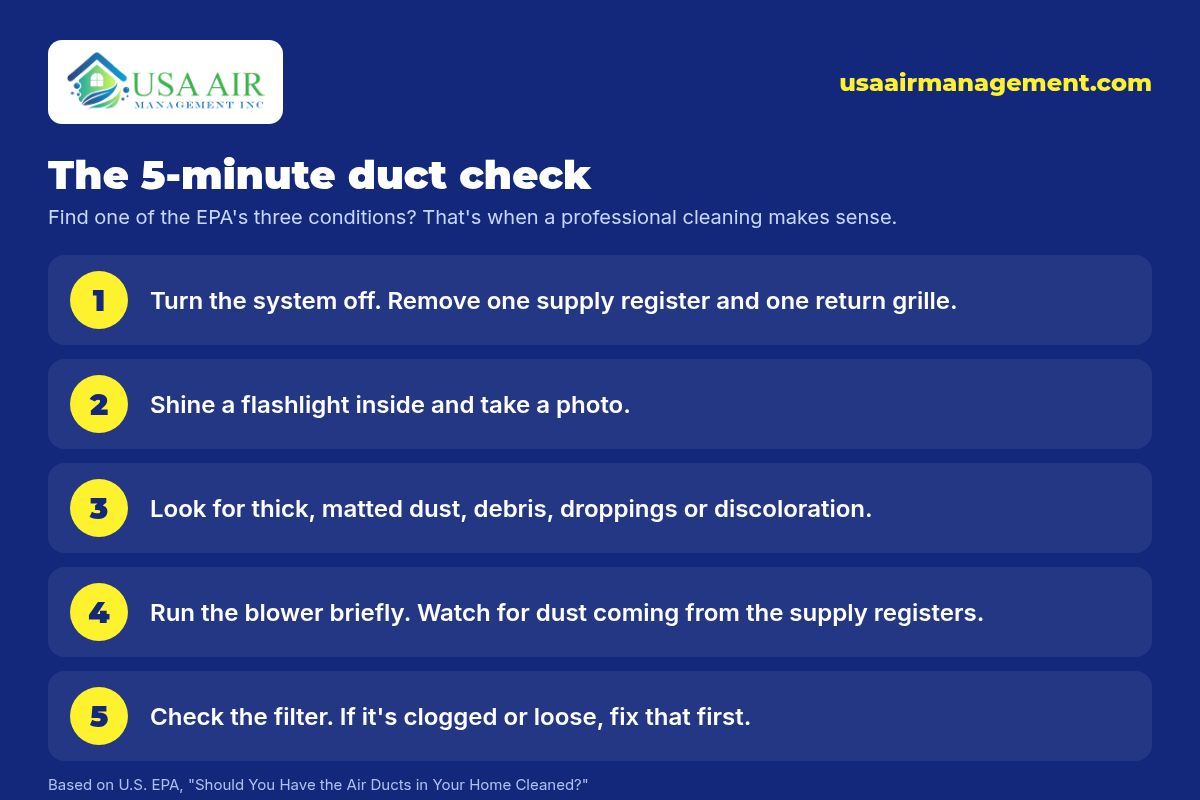
- Turn the system off and remove one supply register and one return grille. A screwdriver is usually all you need.
- Shine a flashlight inside and take a photo.
- Look for thick, matted dust, debris, droppings or discoloration that looks like growth.
- Run the blower briefly and watch for dust coming from the supply registers.
- Check your filter. If it’s clogged or doesn’t fit tightly, fix that first. The EPA recommends regular filter changes and yearly HVAC inspections as preventive maintenance.
If you find one of the EPA conditions, that’s when a professional cleaning makes sense. If you aren’t sure, our video duct inspection shows you what’s inside.
What a complete cleaning should cover
The EPA warns that if any component of a contaminated system is skipped, the whole system can be recontaminated. A proper job covers supply and return ducts, registers, grilles and diffusers, and the air handler, including the coils, drain pan and blower. The EPA also recommends using a provider that follows NADCA standards.
Our complete air duct cleaning includes unlimited vents and returns, all trunk lines and branch ducts, access panels, and the furnace and main chamber. It also comes with a free dryer and chimney inspection. Current pricing is on our coupons page, and our NJ cost guide explains what affects the price.
“Great work! Cleaned chimney, ducts on all 3 floors of house and the dryer… No mess or cleanup after. Great attention to detail.” (Mary R., Google review)
Frequently asked questions
What are the signs that air ducts need cleaning?
According to the EPA: substantial visible mold growth, rodent or insect infestation, or excessive dust and debris, including particles blowing out of the supply registers.
Does air duct cleaning improve health?
The EPA says duct cleaning has never been shown to prevent health problems. Clean for a specific problem, and address other indoor sources of dust and allergens too.
How often should air ducts be cleaned?
The EPA recommends cleaning as needed rather than on a fixed schedule, combined with yearly HVAC inspections and regular filter changes.
Should I let a company spray sealant or biocide in my ducts?
Only with a clear reason. The EPA advises against routine sealants, and says biocides should only be used to control confirmed mold, after cleaning, and according to the label.
How do I schedule a duct inspection or cleaning?
Call Toll free: (877) 811-5131, or visit usaairmanagement.com/coupons.
Questions about your ducts? Current coupons
Sources
- U.S. EPA, Should You Have the Air Ducts in Your Home Cleaned?: https://www.epa.gov/indoor-air-quality-iaq/should-you-have-air-ducts-your-home-cleaned