 By
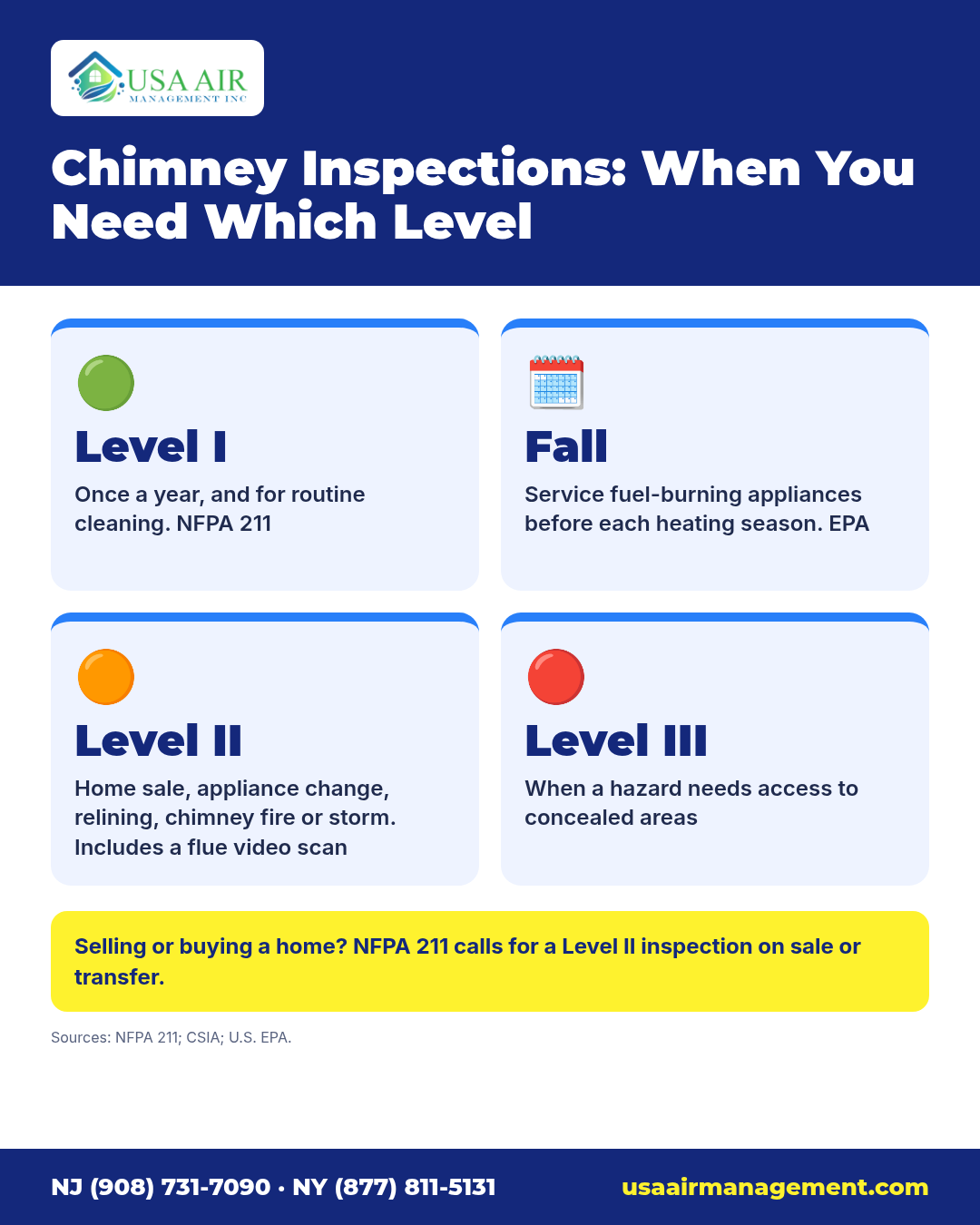
Quick answer: Have your chimney inspected once a year, ideally before heating season. The fire-safety standard NFPA 211 calls for an annual inspection, and the EPA recommends servicing fuel-burning stoves and fireplaces before each heating season. You need a more detailed Level II inspection when you buy or sell a home, change appliances, or after a chimney fire or storm damage.
The baseline: once a year, before you light the first fire
NFPA 211, the National Fire Protection Association’s Standard for Chimneys, Fireplaces, Vents, and Solid Fuel–Burning Appliances, is the standard chimney professionals work from. Its inspection table lists an annual inspection as a routine circumstance for a Level I inspection (NFPA 211 Chapter 15 committee draft). The Chimney Safety Institute of America (CSIA) gives the same advice to homeowners.
The EPA adds a carbon-monoxide angle. If you have a fuel-burning furnace, stove or fireplace, it should be inspected for proper functioning and serviced before each heating season (EPA). In New Jersey and New York that means early fall, before the first cold snap fills every sweep’s calendar.
Inspection and sweeping aren’t the same thing. An inspection tells you whether sweeping or repair is needed. You might use your fireplace a few times a winter and not need a sweep every year, but you still need the inspection.
Video transcript
- When was your chimney last inspected ?
- Once a year , before heating season. NFPA 211 calls for a yearly inspection. The EPA says to service fuel-burning appliances before each heating season.
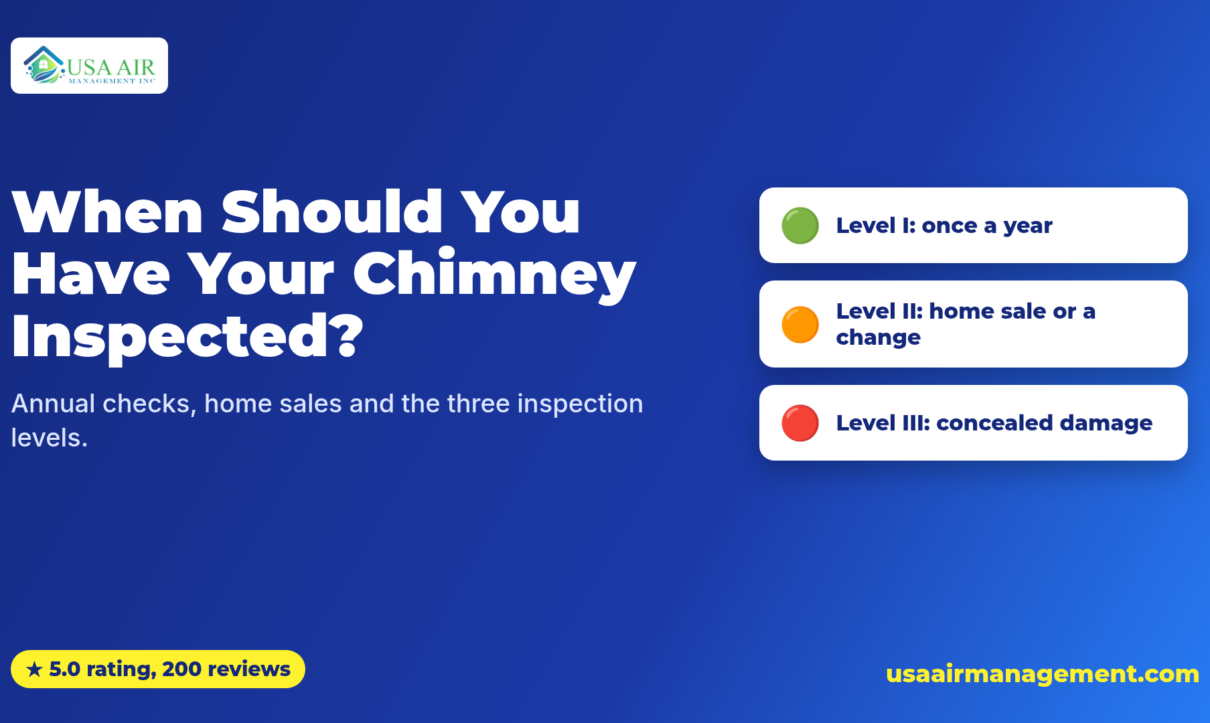
- The 3 inspection levels. Level I: the yearly check; Level II: adds attic, basement and a camera scan of the flue; Level III: opens concealed areas when damage is suspected
- Buying or selling? Level II. NFPA 211 calls for a Level II inspection on sale or transfer of a property.
- Book now if you notice: Smoke backing into the room, Tar smell, Creosote or falling masonry, Rumbling while burning.
- USA Air Management. (877) 811-5131. usaairmanagement.com.
The three inspection levels, in plain English
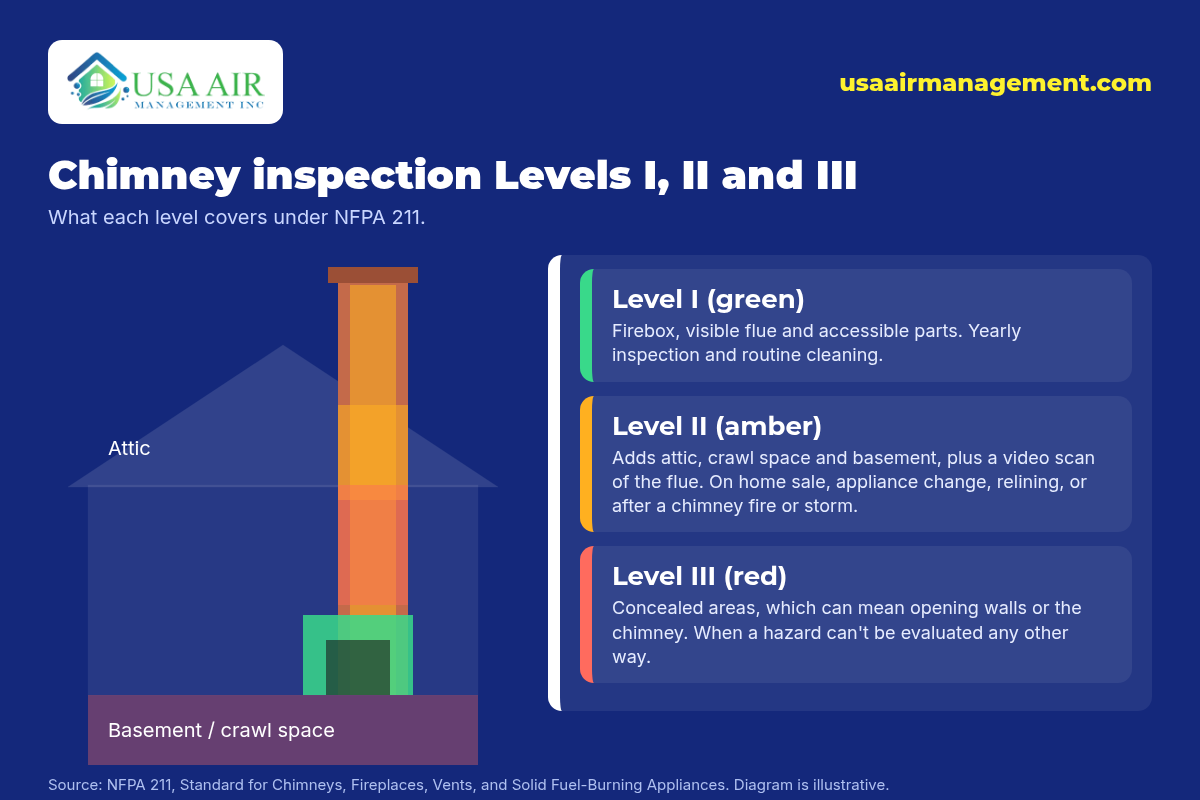
NFPA 211 defines three levels of chimney inspection. The level should match the situation.
Level I: the annual check
This covers the readily accessible parts of the chimney exterior and interior, and the accessible parts of the appliance and its connection. The inspector looks at basic installation and connection and checks the flue for combustible deposits and blockages. When: your yearly inspection, routine cleaning, or a like-for-like appliance replacement, with nothing else changing.
Level II: when something changes
This includes everything in Level I, plus all accessible areas of the chimney, including the attic, crawl space and basement. It includes a video or similar scan of the flue, and checks clearances to combustibles and whether the flue is the right size for the connected appliances. When: – On sale or transfer of a property – When you add or change an appliance to a different type, input rating or efficiency (for example, a wood insert or a new furnace) – Before relining a flue – After an operating malfunction or an external event likely to have damaged the chimney, such as a chimney fire, lightning strike or storm
Level III: when concealed damage is suspected
This includes Levels I and II, plus access to concealed parts of the chimney or building, which can mean removing parts of the structure. When: a Level I or II inspection finds a hazard that can’t be fully evaluated without reaching hidden areas, or to investigate an incident that damaged the chimney or building.
Buying or selling a home in NJ or NY? Ask for a Level II
A general home inspector usually doesn’t do an NFPA-style flue inspection. Under NFPA 211 the minimum on sale or transfer is a Level II, with a camera scan of the flue. For buyers, it can uncover a cracked liner or an undersized flue before closing. For sellers, it means fewer surprises during negotiation. Whether your town legally requires it depends on local code adoption, so check with your municipality.
Signs you need an inspection now, not next fall
- Smoke coming back into the room, or a fire that’s hard to draft
- A strong smoky or tar-like smell, especially in humid weather
- Flaky black deposits (creosote) on the damper or firebox
- Debris, bricks or mortar falling into the firebox, or crumbling masonry and a damaged crown outside
- Water stains on the ceiling or wall near the chimney
- Animal sounds or nesting material
- A loud rumbling or popping sound while burning, which can mean a chimney fire. Get out, call 911, and have the chimney inspected before using it again.
Gas appliances matter too. A gas furnace or water heater often vents through the chimney, and a blocked or deteriorated flue is a carbon monoxide risk. Make sure you have working CO alarms.
What a USA Air Management chimney visit includes
Our technicians clean and inspect fireplaces and chimneys across New Jersey and the New York metro area. Many customers combine services: our complete air duct cleaning includes a free dryer and chimney inspection, and you can add chimney cleaning to that job. We also offer a dryer vent cleaning and chimney inspection package with an HOA written certificate. Current offers and terms are on our coupons page. Service details are on our chimney cleaning page.
“Great work! Cleaned chimney, ducts on all 3 floors of house and the dryer. Alex arrived on time and confirmed appointment with text on way.” (Mary R., Google review)
Frequently asked questions
How often should a chimney be inspected?
Once a year. NFPA 211 lists an annual Level I inspection, and the EPA advises servicing fuel-burning appliances before each heating season.
Do I need a chimney inspection when buying a house?
NFPA 211 calls for a Level II inspection, including a video scan of the flue, on sale or transfer of a property. Local legal requirements vary.
What’s the difference between a Level 1 and a Level 2 chimney inspection?
Level I checks the readily accessible parts of the chimney. Level II adds the attic, crawl space and basement areas, a video scan of the flue, clearances, and flue sizing.
Does a gas fireplace or furnace chimney need inspection?
Yes. NFPA 211 covers vents and chimneys for fuel-burning appliances, and a blocked flue can cause carbon monoxide problems.
How do I schedule a chimney inspection?
Call Toll free: (877) 811-5131, or see current offers at usaairmanagement.com/coupons.
Book before the cold weather: Current coupons
Sources
- NFPA 211 (Chapter 15 inspection table, committee draft): https://docinfofiles.nfpa.org/files/AboutTheCodes/211/211_A2026_CHI_AAA_FD_CIStatements.pdf
- CSIA, Level 2 inspection guidance: https://web.csia.org/external/wcpages/wcmedia/documents/CSIA_Level2_MasonryChimney%20Revision%20Final.pdf
- U.S. EPA (heating-season appliance servicing): https://www.epa.gov/indoor-air-quality-iaq/should-you-have-air-ducts-your-home-cleaned