
 By
Bird Nest in Your Dryer Vent? Signs, Risks and What to Do
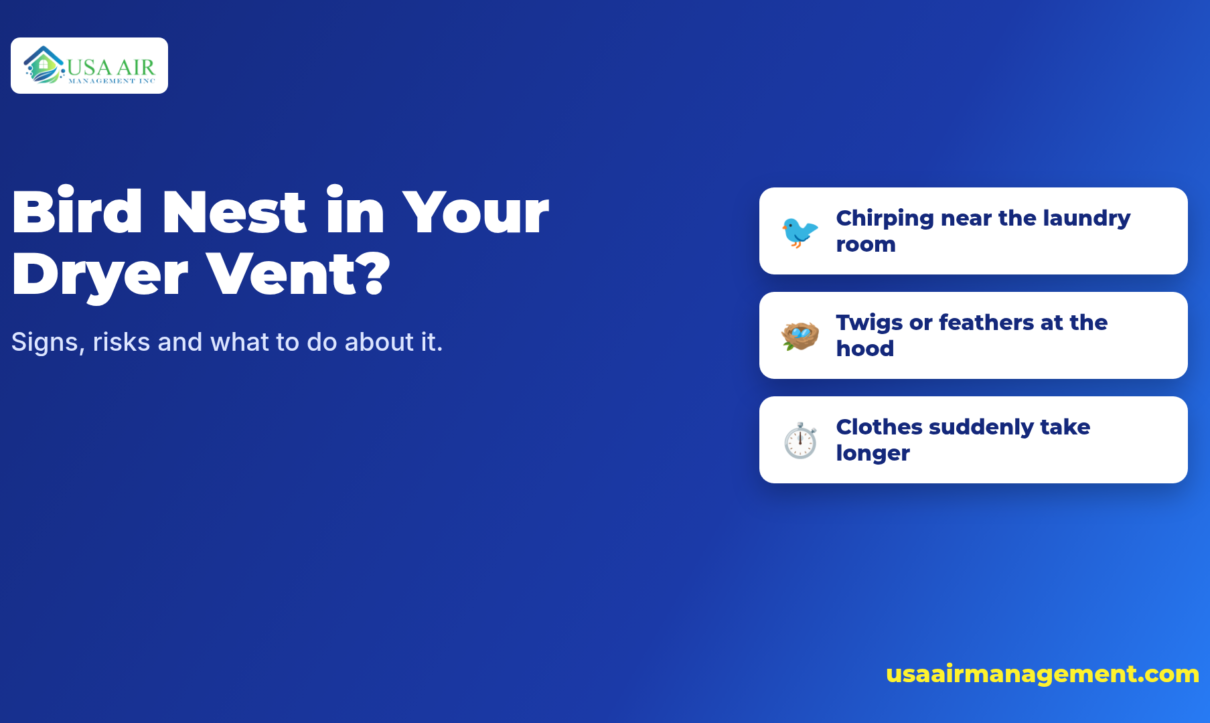
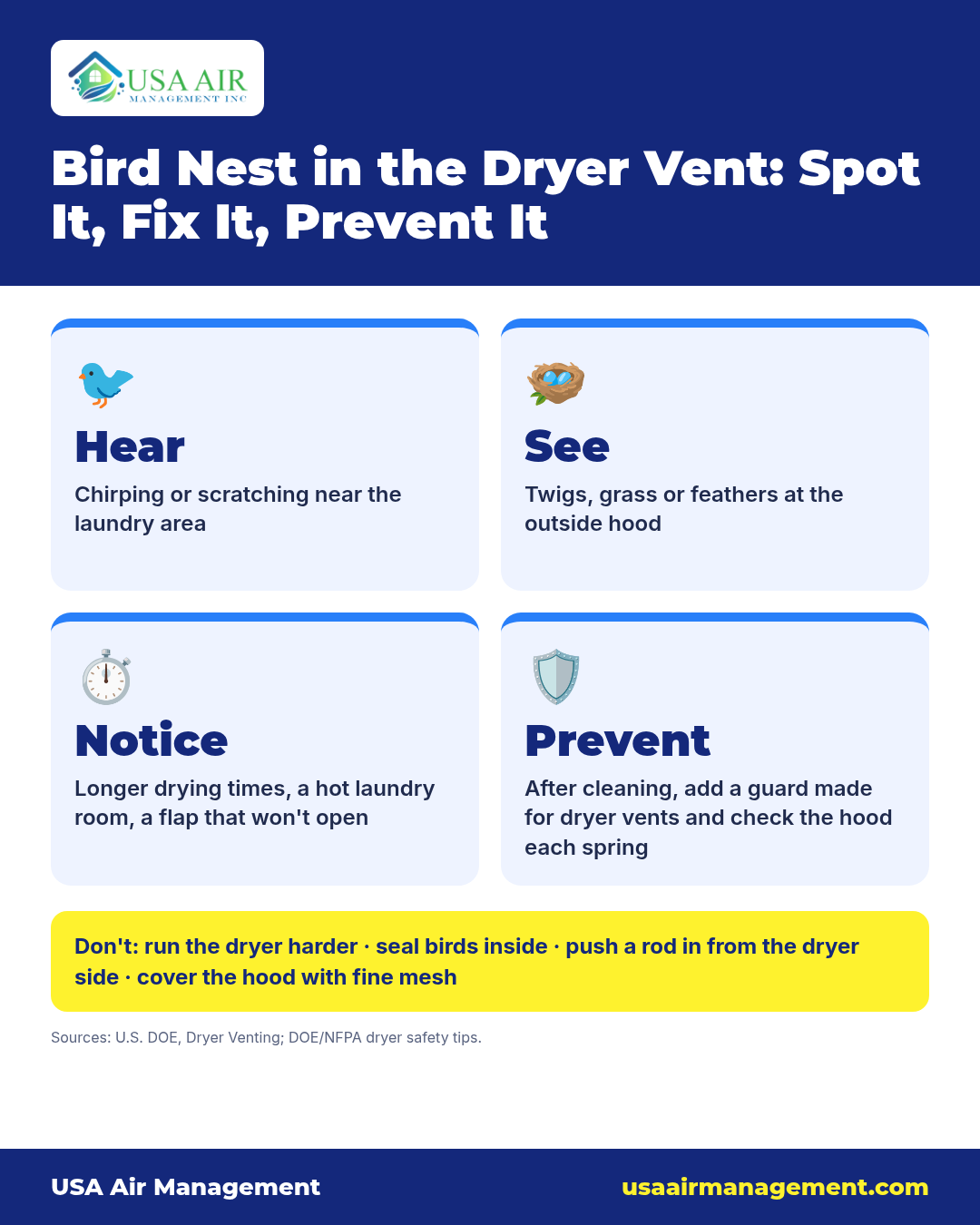
Quick answer: Birds like dryer vents because they’re warm, sheltered and often have a flap that’s stuck open. Common signs are chirping or scratching near the laundry area, twigs, grass or feathers at the outside hood, and clothes that suddenly take much longer to dry. A nest blocks airflow, which makes the dryer run hot and can create a fire hazard. Don’t run the dryer harder to compensate. Have the vent cleared, then add a guard designed for dryer vents.
Why birds pick dryer vents
The exterior hood is a small, warm opening, often under an eave or deck where it’s protected from weather. When lint builds up, it can hold the hinged flap partly open, which gives birds and rodents an easy way in. A Department of Energy-hosted article on dryer venting lists clogged vent caps among the leading causes of reduced airflow and notes that “birds or rodents sometimes block dryer vents” (DOE, Dryer Venting).
Video transcript
- Hearing chirping behind the dryer? Birds love warm, sheltered dryer vents.
- Signs of a nest include chirping or scratching, twigs or feathers at the vent hood, a flap that won't open, and longer drying times.
- Why does it matter? A nest blocks airflow, so the dryer runs hot, and dry nesting material traps lint.
- What to do: stop using the dryer, don't seal birds in, have the whole vent run cleaned, and add a guard made for dryer vents.
- To prevent the next one, check the hood each spring and keep the vent on a yearly cleaning schedule.
- USA Air Management cleans dryer vents, air ducts and chimneys. Find current offers at usaairmanagement.com/coupons.
Signs there’s a nest in your dryer vent
- Sounds: chirping, fluttering or scratching in the wall or ceiling near the dryer, often early in the morning.
- Debris at the hood: twigs, grass, straw or feathers sticking out of the flap or louvers.
- Birds going in and out of the hood.
- A flap that doesn’t open when the dryer runs, or very little air coming out.
- Longer drying times, a hot laundry room, or a burning smell. These are the same symptoms as a lint clog. Our post on the signs of a clogged dryer vent explains the outside flap test.
Why a nest is more than a nuisance
Nesting material is dry and burns easily, and it usually traps lint behind it. The DOE and NFPA dryer safety sheet says to make sure the exhaust vent pipe isn’t restricted and that the outdoor flap opens when the dryer runs (DOE / NFPA dryer safety tips). A nest defeats both. With a gas dryer, a blocked vent can also push exhaust containing carbon monoxide back indoors. See can a clogged dryer vent cause carbon monoxide?
What to do if you find a nest
- Stop using the dryer until the vent is clear.
- Don’t seal the hood with birds inside, and don’t push a rod in from the dryer side. That can compact the nest deeper in the run or pull apart hidden joints.
- If chicks are present, wait or call a professional. Removing an active nest can be messy and stressful for the birds, and parents will keep returning while chicks are inside.
- Have the entire run cleaned, not just the nest at the hood. Lint and nesting material usually sit further back in the duct.
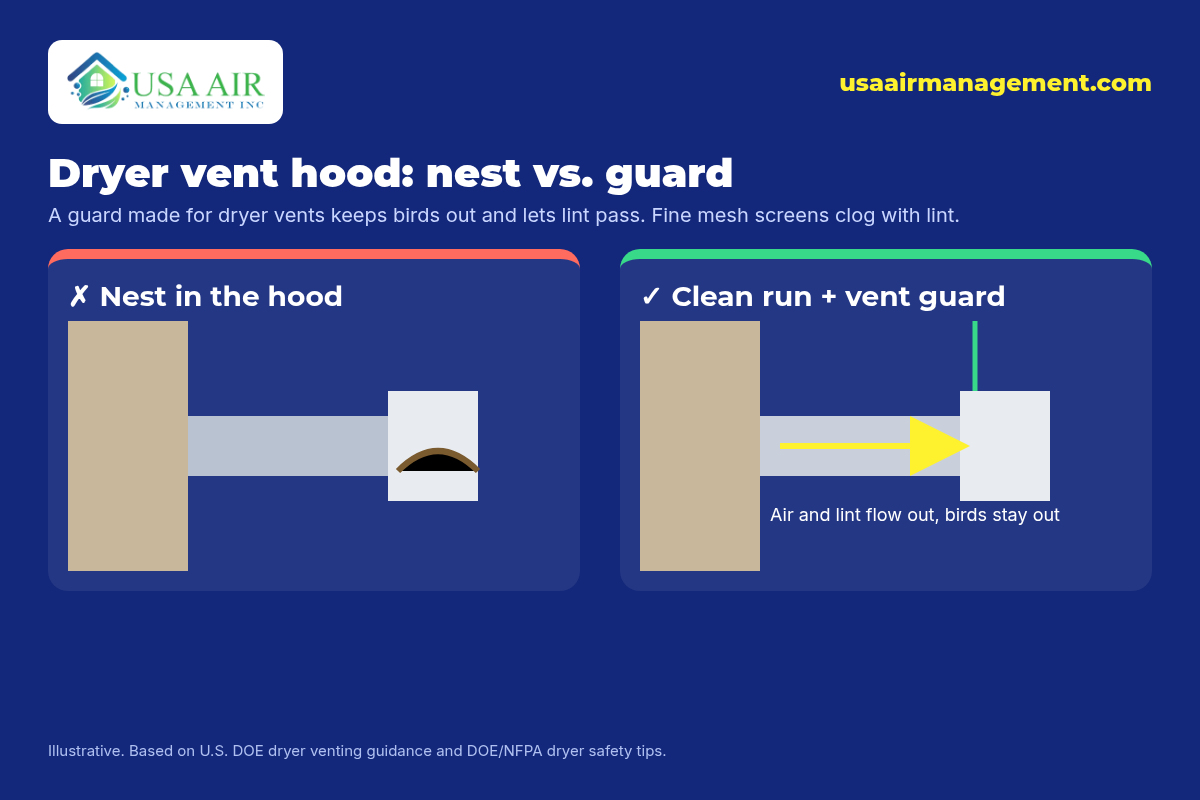
- Install a guard made for dryer vents after cleaning. Avoid fine mesh screens over the outlet, because lint clogs them quickly. A proper guard keeps birds out while letting lint pass.
Preventing the next nest
- Clean the lint filter every load so less lint reaches the hood and holds the flap open.
- Check the outside hood each spring, when birds are building nests. Make sure the flap closes fully when the dryer is off.
- Replace a broken or missing flap or louvers.
- Keep the full vent on a yearly cleaning schedule. See how often a dryer vent should be cleaned.
How we handle nests
Our technicians clean the whole vent run with a rotary brush and a high-pressure blower, clear the exterior hood, and check that the flap works. Our dryer vent page recommends rodent and bird screen protection on the outside hood. Bird nest removal can carry an extra fee, as noted on our coupons page. Details are on our dryer vent cleaning page.
Frequently asked questions
How do I know if a bird is nesting in my dryer vent?
Listen for chirping or scratching near the laundry area, look for twigs, grass or feathers at the outside hood, and check whether the flap opens when the dryer runs. Sudden longer drying times are another clue.
Is a bird nest in a dryer vent dangerous?
Yes. It blocks airflow, which makes the dryer run hot, and the dry nesting material and trapped lint can catch fire. With a gas dryer, a blocked vent can also push exhaust back indoors.
Can I remove a bird nest from my dryer vent myself?
You can clear loose material you can reach at the hood. Nests deeper in the duct, long runs and roof vents are better left to a professional, so the nest isn’t compacted further in and hidden joints aren’t pulled apart.
How do I keep birds out of my dryer vent?
After a full cleaning, install a guard designed for dryer vents and make sure the flap closes. Avoid fine mesh screens, because lint clogs them.
How do I book a nest removal and vent cleaning?
Call the toll-free number below or see current offers at usaairmanagement.com/coupons.
Schedule a dryer vent cleaning: Toll free: (877) 811-5131 · Current coupons
Sources
- U.S. DOE, Dryer Venting: https://www.energy.gov/sites/prod/files/2016/06/f32/Dryer_Venting.pdf
- U.S. DOE (NFPA), Clothes Dryer & Washing Machine Safety: https://www.energy.gov/documents/nfpadryerwashersafetytipspdf