
 By
Why Does My House Smell Musty When the AC Turns On?
- Established 1996
- NADCA methods & standards
- Licensed and insured
- Flat rate, no hidden costs
- Only certified technicians
- ★★★★★5.0 rating, 200 reviews
Quick answer: A musty or “dirty sock” smell when the air conditioning starts usually means moisture is sitting somewhere and microbes are growing. Common sources are ducts that run through a damp basement, crawl space or attic, leaky return ducts, a dirty or damp filter, high indoor humidity, or a clogged AC drain line. Start with the filter and your humidity level. If the smell stays, have the ducts inspected and have an HVAC technician check the AC system.
Why AC air can smell musty
An air conditioner pulls moisture out of the air, and that water has to drain away. Anywhere moisture lingers, whether in the AC system, in ductwork running through damp spaces, or in a home with high humidity, dust and dampness can give mold and bacteria a place to grow. When the AC kicks on, air moving through the ducts carries that smell out of the vents.
The EPA notes that duct systems can become contaminated with mold if moisture is present, and that the moisture source has to be fixed or the problem will come back (EPA, Should You Have the Air Ducts in Your Home Cleaned?). Its mold guide also says to keep air conditioning drain lines unobstructed and flowing properly, and to keep indoor humidity in check (EPA, A Brief Guide to Mold, Moisture and Your Home).
The most likely causes
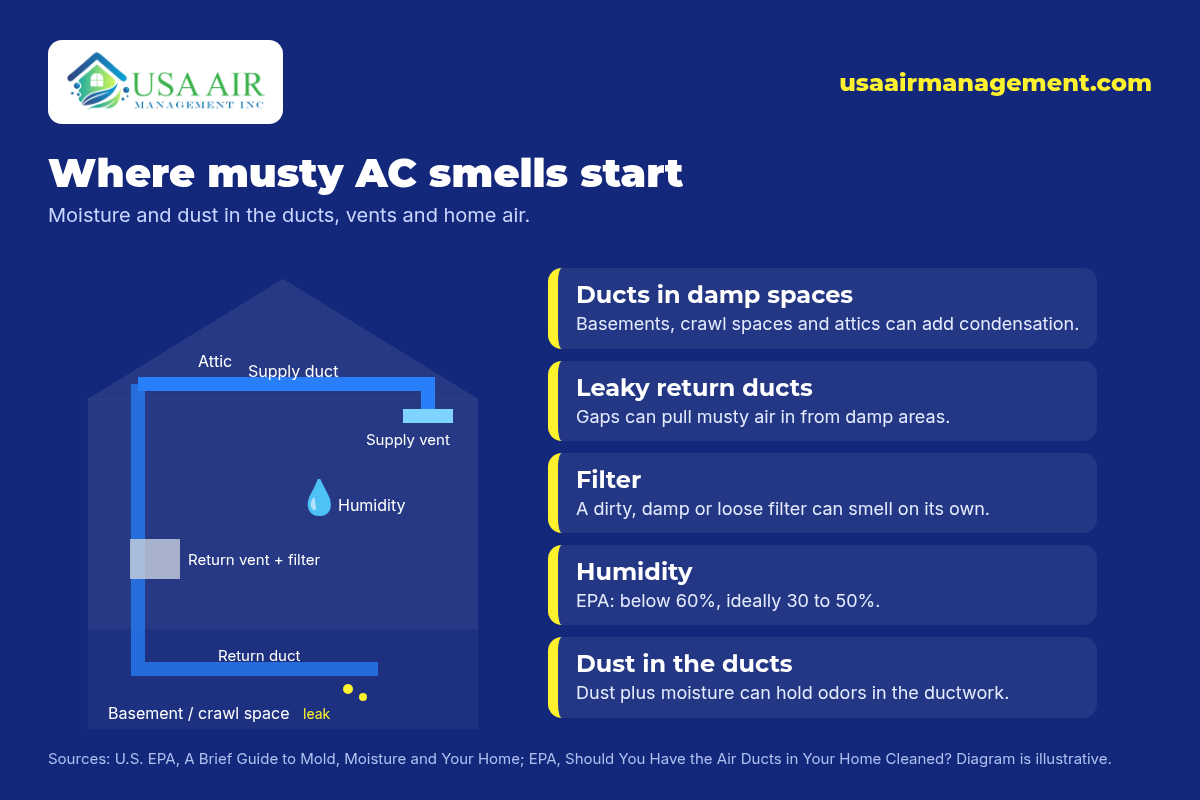
- Ducts in damp spaces. Ducts in a damp basement, crawl space or hot attic can collect condensation and hold musty odors.
- Leaky return ducts. Gaps and loose joints in return ducts can pull in musty air from those same damp areas.
- Dirty or loose filter. A damp or clogged filter can smell musty on its own, and a loose one lets more dust into the ducts.
- High indoor humidity. The EPA recommends keeping indoor humidity below 60 percent, and ideally between 30 and 50 percent. An oversized system that runs in short bursts may cool the air without removing much moisture.
- A clogged AC drain line. If water around the indoor unit or a ceiling stain below an attic unit shows the drain isn’t flowing, have an HVAC technician look at it.
What you can check yourself
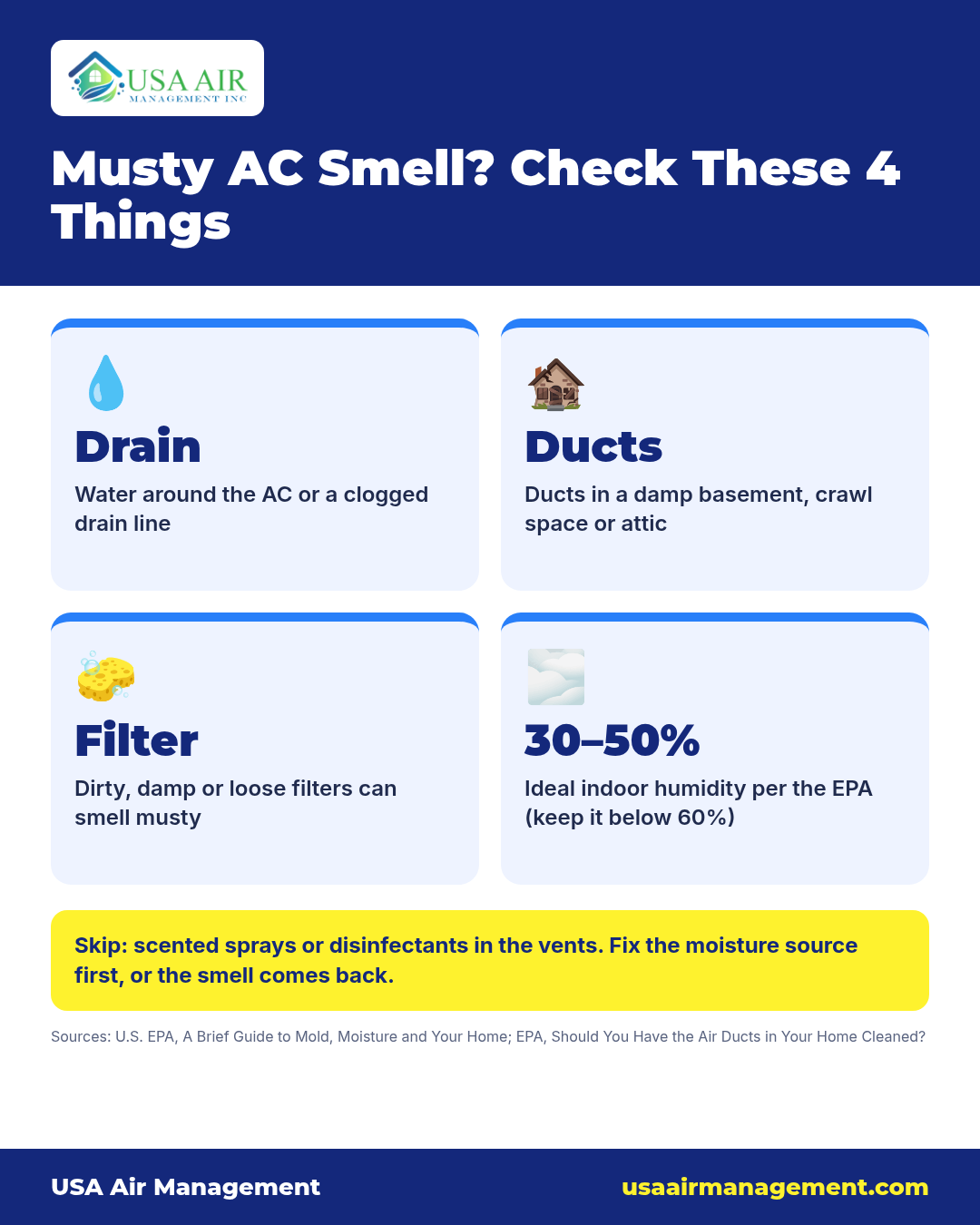
- Replace the filter and make sure it fits snugly in its slot.
- Measure humidity with an inexpensive humidity meter. If it’s regularly above 60 percent, fix that first.
- Sniff the vents and returns. If one room or one return smells worse, the duct run serving it, especially one through a basement, crawl space or attic, is a likely source.
- Look for water around the indoor AC unit or stains on ceilings below it. That’s a job for an HVAC technician.
Don’t spray scented products or disinfectants into the vents. The EPA says biocides should only be used, if at all, after cleaning and according to the label, and fragrance just hides the smell.
When it’s time for a professional
Call a professional if the smell comes back after a new filter and humidity is under control, or if you see dust buildup or growth at the vents or inside the ducts. If you see water around the AC unit, have an HVAC technician check the system. If mold is suspected in the ducts, the EPA advises asking the provider to show it to you, and fixing the moisture source, or it will come back. Our post on the signs your air ducts need cleaning covers when duct cleaning is, and isn’t, the answer.
How we help with musty duct smells
If the ducts are part of the problem, our video duct inspection shows you what’s inside before anything is cleaned, and our complete air duct cleaning covers the duct system throughout your NJ home. Current offers are on our coupons page.
Frequently asked questions
Why does my AC smell musty when it first turns on?
Usually because moisture and dust have built up somewhere the air passes, such as ducts in a damp basement, crawl space or attic, a damp filter, or a home with high humidity. The smell is often strongest when air first starts moving through the ducts.
Can a clogged AC drain line cause a musty smell?
Yes. When the drain line clogs, water can’t leave the system, and standing water quickly develops a musty odor. The EPA advises keeping drain lines flowing. If you see water around the unit, have an HVAC technician check it.
What indoor humidity helps prevent musty smells?
The EPA recommends keeping indoor humidity below 60 percent, and ideally between 30 and 50 percent.
Will air duct cleaning get rid of a musty smell?
Only if the ducts are actually the source. Humidity, a damp filter or a drainage problem can also be the cause, so check those too. Cleaning ducts without fixing the moisture problem won’t last.
How do I book a duct inspection?
Call the number below or see current offers at usaairmanagement.com/coupons.
Questions about a musty smell? Call: (908) 731-7090 · Current coupons
Sources
- U.S. EPA, Should You Have the Air Ducts in Your Home Cleaned?: https://www.epa.gov/indoor-air-quality-iaq/should-you-have-air-ducts-your-home-cleaned
- U.S. EPA, A Brief Guide to Mold, Moisture and Your Home: https://www.epa.gov/mold/brief-guide-mold-moisture-and-your-home